Galeux d’Eysines: The Extraordinary French Peanut Pumpkin
Some pumpkins are beautiful. Others are downright extraordinary. The Galeux d’Eysines pumpkin, also known as the French Peanut Pumpkin, is most definitely extraordinary!
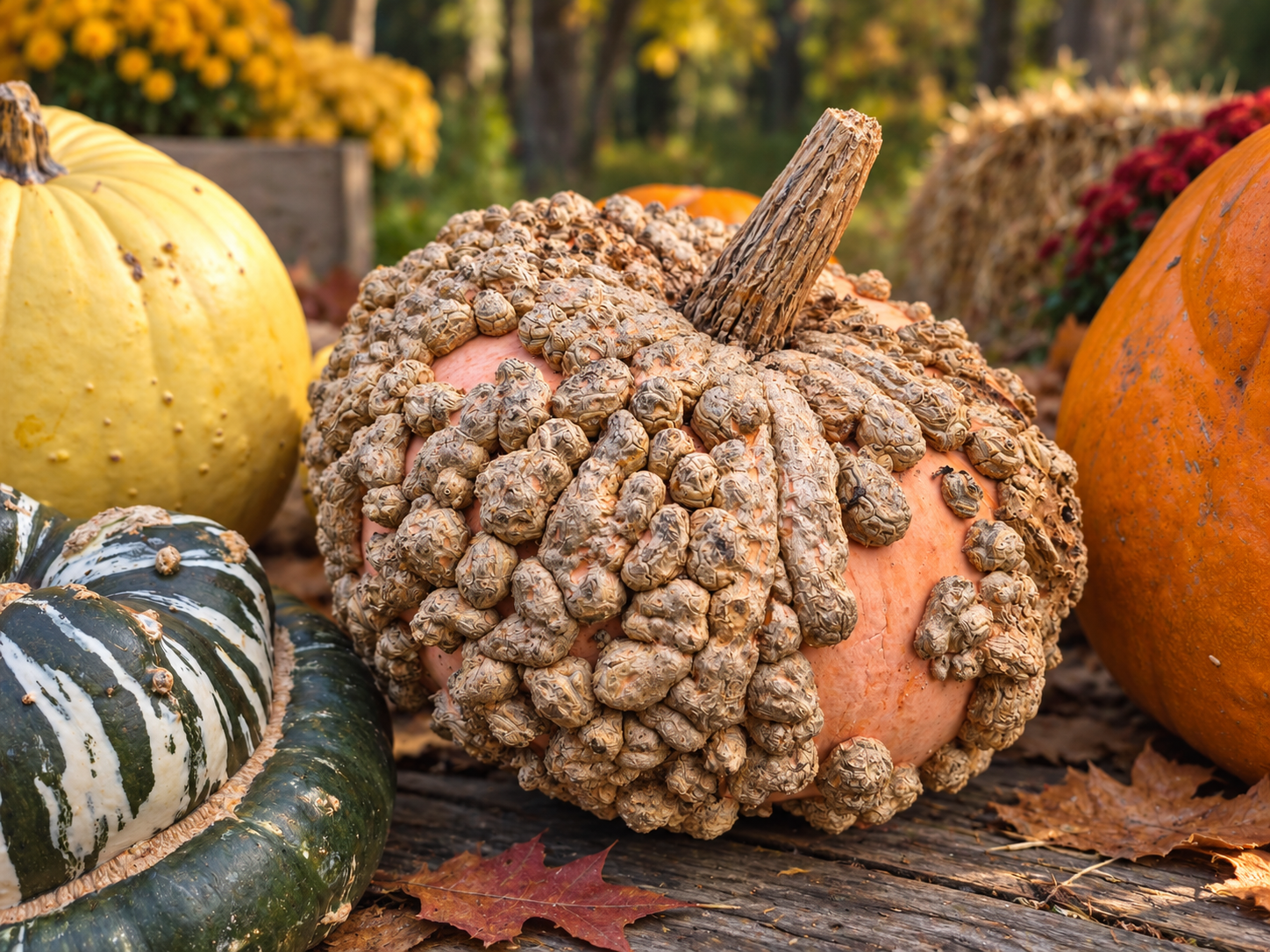
With its gorgeous salmon-pink colouring and strange, peanut-like bumps covering its skin, this remarkable French heirloom winter squash looks like something straight out of a fairy tale.
When I came across one, I simply couldn’t resist bringing it home and photographing it. Just look at that texture! It’s one of the most unusual pumpkins I’ve encountered, and there’s a fascinating story behind its appearance.
But Galeux d’Eysines isn’t merely a decorative novelty. Beneath that fascinating exterior is an edible winter squash with sweet, richly coloured flesh that can be used in everything from comforting soups to delicious roasted vegetable dishes.
Let’s explore where this remarkable pumpkin comes from, why it develops those curious growths, and how to select, prepare, cook, grow, harvest and store it.
What Is Galeux d’Eysines Pumpkin?
Galeux d’Eysines is an heirloom winter squash belonging to the species Cucurbita maxima, the same species that includes several other impressive winter squash varieties.
It originated in France and is associated with the Eysines area near Bordeaux, in southwestern France.
The variety is sometimes called the French Peanut Pumpkin, Peanut Squash, or Galeuse d’Eysines.
Its French name refers to the warty or embroidered appearance of its rind. A traditional name associated with the variety is Courge Brodée Galeuse, often interpreted as an embroidered, warty squash.
These pumpkins are typically large, flattened to rounded, and covered with irregular corky growths that make each fruit look completely different from the next.
Common characteristics include:
- Species: Cucurbita maxima.
- Origin: France, associated with the Bordeaux region.
- Skin colour: Salmon-pink, peach or pinkish-orange when mature.
- Skin texture: Distinctive raised, corky, peanut-like growths.
- Shape: Broad, rounded or slightly flattened, often with visible ribs.
- Flesh: Deep orange, dense and generally sweet when mature.
- Typical size: Often approximately 10–20 lb (4.5–9 kg), although growing conditions can produce smaller or larger fruit.
- Growing season: Commonly around 90–105 days to maturity, depending on conditions.
Like many other winter squash varieties, Galeux d’Eysines is valued for both its ornamental appearance and its culinary potential.
Why Does the French Peanut Pumpkin Have Warts?
The most recognizable feature of a Galeux d’Eysines pumpkin is undoubtedly its unusual rind.
Those bumps aren’t peanuts, insects, or ordinary dirt stuck to the skin. They’re naturally occurring corky growths that develop as the squash matures.
These raised formations are associated with sugar development in the rind and are an expected characteristic of this particular heirloom variety.
As the fruit develops, irregular areas of the skin become raised and rough, giving the pumpkin its familiar peanut-shell appearance.
Some fruits develop scattered clusters, while others become heavily covered in corky formations.
That means the bumps are not automatically a sign of disease or spoilage. On a healthy Galeux d’Eysines, they’re part of what makes the variety so special.
However, there is an important distinction between natural corky growths and actual deterioration.
Normal Pumpkin Warts Versus Signs of Spoilage
Healthy, characteristic growths are generally firm and dry, while spoilage may involve softness, moisture, mould, collapse or unpleasant odours.
When examining a pumpkin, pay attention to its overall condition rather than simply counting the bumps.
- Normal: Firm, dry, corky raised areas that are part of the rind.
- Concerning: Soft or sunken spots that feel wet or mushy.
- Concerning: Fuzzy mould, leaking liquid or areas of active decay.
- Concerning: A strong sour, fermented or rotten smell.
If a squash is visibly mouldy, leaking or rotting, discard it rather than attempting to preserve it.
Where Does Galeux d’Eysines Come From?
The French Peanut Pumpkin has a history connected to the traditional vegetable-growing culture of southwestern France.
Eysines is located near Bordeaux, an area well known for its agricultural traditions.
Galeux d’Eysines appears in historical descriptions of French squash varieties, and heirloom seed growers have helped preserve and reintroduce it to modern gardeners.
Unlike many modern pumpkins grown primarily for uniform size and appearance, heirloom varieties such as this one are treasured for their distinctive characteristics.
That includes variations in shape, texture, colour, flavour and growing habits.
It’s easy to understand why the French Peanut Pumpkin has remained popular among heirloom enthusiasts. Few vegetables are quite so visually memorable!
What Does Galeux d’Eysines Pumpkin Taste Like?
Despite its unusual appearance, Galeux d’Eysines is a genuine cooking squash.
Seed growers commonly describe its mature flesh as sweet, smooth and richly flavoured, making it suitable for both savoury and sweet preparations.
The flesh is usually deep orange, with a texture that works particularly well for cooking and puréeing.
Furthermore, its natural sweetness makes it an appealing ingredient for autumn dishes that benefit from a rounded, mellow squash flavour.
As with other winter squash, the final flavour depends on maturity, growing conditions, storage and cooking method.
A well-matured squash may be noticeably sweeter than one harvested too early.
Can You Eat a Galeux d’Eysines Pumpkin?
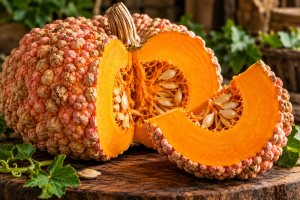
Yes! Galeux d’Eysines is an edible heirloom winter squash.
The orange flesh can be roasted, baked, simmered or puréed for a variety of dishes.
The tough, heavily textured outer rind isn’t generally the part cooks are interested in eating. For most recipes, it’s easier to cook the squash and separate the softened flesh from the skin.
Here are some delicious ways to use it:
- Roasted squash: Roast wedges until tender and lightly caramelized.
- Autumn soups: Blend cooked squash with broth, onions, garlic and warming spices.
- Squash purée: Prepare a smooth base for baking, soups and sauces.
- Vegetable side dishes: Serve roasted squash with herbs, butter or olive oil.
- Winter squash pasta sauces: Blend the cooked flesh into a creamy sauce.
- Sweet baking: Experiment with properly drained squash purée in pumpkin-style baked goods.
- Stuffed squash: Use suitable roasted sections as a base for savoury fillings.
Since this is a large variety, one squash can provide plenty of flesh for several different meals.
How to Prepare Galeux d’Eysines for Cooking
That gorgeous, bumpy rind can make the French Peanut Pumpkin seem intimidating, but preparing it doesn’t have to be difficult.
For large or awkward winter squash, I often prefer cooking the flesh in sections rather than trying to peel the entire raw squash.
Step 1: Wash the Pumpkin
Wash the outside under clean running water, gently scrubbing away surface dirt.
Even when you don’t intend to eat the rind, cleaning it helps prevent transferring dirt from the outside to the edible flesh when cutting.
Dry the pumpkin and place it on a sturdy, non-slip cutting board.
Step 2: Cut It Carefully
Use a large, sharp knife suitable for cutting firm winter squash.
Because Galeux d’Eysines can be quite large, take your time and make sure the pumpkin is stable before cutting.
Never force a knife through hard squash or attempt to catch a slipping blade.
Cut the squash into manageable sections and remove the seeds and fibrous centre with a sturdy spoon.
Step 3: Choose Your Cooking Method
For simple preparation, roasting is an excellent choice.
In addition, roasting helps concentrate flavour, softens the flesh and makes it easier to remove the rind afterward.
How to Roast French Peanut Pumpkin
This is a simple general roasting method suitable for mature Galeux d’Eysines winter squash.
Ingredients
- 1 mature Galeux d’Eysines pumpkin, or a portion of one
- 1–2 tablespoons olive oil, as needed
- Salt, to taste
- Freshly ground black pepper, to taste
- Optional: thyme, rosemary, sage, cinnamon or other seasonings
Instructions
- Preheat your oven to 400°F (200°C).
- Wash and dry the squash.
- Carefully cut it into manageable wedges and remove the seeds and stringy centre.
- Arrange the wedges on a parchment-lined or lightly oiled rimmed baking sheet, cut sides facing up.
- Brush the exposed flesh lightly with olive oil.
- Season with salt, pepper and any desired herbs or spices.
- Roast for approximately 35–60 minutes, depending on the thickness of the pieces.
- Check for tenderness by inserting a fork or the tip of a knife into the thickest portion of the flesh.
- When completely tender, remove from the oven and allow the squash to cool enough to handle safely.
- Scoop the cooked flesh away from the rind, or serve the wedges with the inedible skin left behind.
Cooking tip: The time required will vary considerably with the size and thickness of your pumpkin wedges. Cook until tender rather than relying on the clock alone.
For a smoother purée, mash or blend the roasted flesh once it has cooled slightly. If it contains excess moisture, drain it before using it in recipes that require a thick pumpkin purée.
Editor’s note: This roasting method is a general cooking guide for mature winter squash, not a record of a recipe prepared with the particular photographed pumpkin.
How to Use French Peanut Pumpkin in Recipes
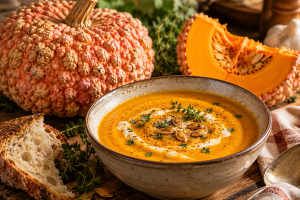
Once you’ve roasted your Galeux d’Eysines, you can enjoy it simply as a side dish or use the cooked flesh in other recipes.
It pairs beautifully with many familiar autumn flavours:
- Butter and brown sugar
- Maple syrup
- Sage and thyme
- Garlic and onions
- Ginger and cinnamon
- Nutmeg and cloves
- Toasted walnuts and pecans
- Parmesan cheese
- Cream and vegetable broth
For more seasonal cooking inspiration, browse our Pumpkin Recipes and discover more ways to cook with winter squash.
You might also enjoy:
- How to Bake Pumpkin Cheesecake
- How to Make Pumpkin Pie
- Perfect Pumpkin Pie Filling
- Brandy Cardamom Pumpkin Custard
- How to Cook Roasted Butternut Squash Ravioli
- Pumpkin Cheesecake for National Pumpkin Cheesecake Day
How to Grow a Galeux d’Eysines Pumpkin
Galeux d’Eysines is a vigorous, sprawling winter squash that needs sunshine, warm soil and sufficient space to develop its large fruit.
Its growing requirements are broadly similar to other varieties of Cucurbita maxima.
Sun and Soil
Plant in a location receiving at least six to eight hours of direct sunlight each day.
Choose fertile, well-drained soil enriched with mature compost or other suitable organic matter.
Winter squash generally performs best when the soil stays consistently moist without becoming waterlogged.
When to Plant
Squash plants are sensitive to frost and require warm growing conditions.
In colder regions of Canada, gardeners may benefit from starting seeds indoors a few weeks before transplanting, using containers that minimize root disturbance.
Transplant only after frost danger has passed and the soil has warmed sufficiently.
Alternatively, direct-sow seeds outdoors when conditions are reliably warm.
Plant Spacing
This is not a tiny patio pumpkin!
Galeux d’Eysines develops long vines and substantial fruit, so it requires generous growing space.
Allow approximately 4–6 feet (1.2–1.8 m) or more between planting hills, adjusting spacing according to the seed supplier’s recommendations and the growing method.
Mulch can help conserve moisture, suppress weeds and reduce direct contact between developing squash and damp soil.
Watering and Feeding
Provide consistent watering, especially during flowering and fruit development.
Water the soil near the base of the plants rather than frequently soaking the foliage.
Healthy soil, compost and appropriate fertilization will support vigorous growth without encouraging unnecessary excess foliage.
Pollination
Like other pumpkins and squash, Galeux d’Eysines produces separate male and female flowers on the same plant.
Pollinating insects transfer pollen between the flowers, allowing the female flowers to develop into fruit.
If you save seeds, remember that compatible Cucurbita maxima varieties can cross-pollinate. Seeds from an unisolated planting may not produce fruit identical to the parent variety.
When Is Galeux d’Eysines Ready to Harvest?
Galeux d’Eysines commonly needs about 90–105 days to mature, although weather and growing conditions will affect its development.
Look for several signs rather than relying on the calendar alone:
- The fruit has developed its characteristic mature colouring.
- The rind feels firm and resists light pressure from a fingernail.
- The stem has begun to dry and become corky.
- The pumpkin has reached a substantial, mature size for the variety.
- The distinctive corky markings have developed.
These features help indicate maturity, but not every squash develops exactly the same number or size of bumps.
When harvesting, use clean pruning shears or a sharp knife and leave a short section of stem attached.
Do not carry a large pumpkin by its stem. Support the weight of the squash itself to avoid damaging it.
What Happens When Frost Hits Your Pumpkin Patch?
Autumn frost can arrive surprisingly quickly, particularly in cooler climates.
A light frost may damage the tender leaves and vines before causing serious injury to mature fruit. However, exposure to freezing temperatures can shorten storage life, especially if the rind or flesh actually freezes.
That’s why it’s important to distinguish between frost-damaged vines and frost-damaged pumpkins.
If the Leaves Have Wilted
Inspect the fruit carefully. Mature pumpkins with firm, undamaged skins may still be usable even if the surrounding foliage has collapsed.
When a hard freeze threatens, harvest suitable fruit promptly instead of leaving it exposed.
If the Pumpkin Itself Was Frozen
Squash that has actually frozen or developed soft, water-soaked areas is not a good candidate for long-term storage.
If the fruit remains sound, undamaged and suitable for cooking, use it promptly rather than attempting to store it for months.
Discard fruit showing mould, rot, leaking or extensive softening.
What About Immature Pumpkins?
Immature winter squash generally has a shorter storage life than fully mature fruit.
Its flesh may also be less sweet and have a different texture.
Use immature squash relatively soon when appropriate, and avoid treating it as a fully cured storage pumpkin.
How to Cure and Store Galeux d’Eysines Pumpkin
Proper handling makes a considerable difference to how well winter squash keeps after harvest.
Galeux d’Eysines is often described as a good storage squash, but actual keeping quality depends on maturity, rind condition, curing and storage environment.
Curing Winter Squash
Healthy, mature Cucurbita maxima squash can benefit from a brief period of warm curing after harvest.
When curing is appropriate, place the fruit in a warm, well-ventilated environment for approximately 5–10 days, following established winter squash curing guidance.
Ideal curing temperatures are often around 80–85°F (27–29°C), but household conditions may differ.
Do not attempt to cure fruit that is actively rotting or badly damaged.
Long-Term Storage
After curing, store sound winter squash in a cool, dry, well-ventilated location.
A typical target temperature is approximately 50–55°F (10–13°C).
- Keep pumpkins off cold, wet floors.
- Allow air to circulate around each fruit.
- Avoid piling large squash on top of one another.
- Keep away from freezing temperatures.
- Check regularly for softening, mould or decay.
- Remove deteriorating squash promptly.
Do not assume every pumpkin will last for the same number of months. Even among the same variety, storage life can vary.
Can You Save Galeux d’Eysines Seeds?
Yes. Galeux d’Eysines is an open-pollinated heirloom variety, so gardeners may save seeds from mature, healthy fruit.
However, preserving the variety’s characteristic appearance requires attention to cross-pollination.
If bees have transferred pollen from another compatible Cucurbita maxima variety, seeds from your pumpkin may produce different-looking offspring.
For reliable seed saving, growers use appropriate isolation distances or controlled hand-pollination.
To prepare seeds for storage:
- Remove mature seeds from healthy squash.
- Separate them from the surrounding pulp.
- Rinse when necessary.
- Dry thoroughly in a well-ventilated location away from excessive heat.
- Store completely dry seeds in a labelled container in cool, dry conditions.
Label the variety, harvest year and any relevant pollination information.
Is Galeux d’Eysines a Pumpkin or a Squash?
Both descriptions are commonly used.
In everyday language, many people call large, rounded winter squash pumpkins, particularly when their shape resembles the traditional autumn pumpkin.
Botanically, Galeux d’Eysines belongs to Cucurbita maxima, and in the kitchen it behaves as an edible winter squash.
So whether you call it a French Peanut Pumpkin, Peanut Squash or Galeux d’Eysines, you’re talking about the same remarkable heirloom variety.
Watch Pumpkin Recipes + Reviews
Looking for more ways to enjoy pumpkin and winter squash in your kitchen?
Explore our Cooking With Kimberly pumpkin cooking shows, recipes and food reviews.
Why the French Peanut Pumpkin Deserves a Place in Your Autumn Kitchen
There’s something wonderful about discovering an ingredient that makes you stop and look twice.
Galeux d’Eysines is a perfect example.
At first glance, it might seem like an unusual ornamental pumpkin. But behind those quirky, peanut-like growths is a fascinating French heirloom with a long agricultural tradition and delicious culinary possibilities.
It’s beautiful enough for an autumn display, interesting enough to start a conversation, and practical enough to become part of a home-cooked meal.
For me, those are some of the very best reasons to explore new and unusual ingredients.
Next time you’re visiting a farm market or browsing an heirloom pumpkin display, keep an eye out for this unforgettable French Peanut Pumpkin.
And if you find one, don’t be put off by its bumps. They’re part of its charm!
Have you ever seen or cooked a Galeux d’Eysines pumpkin? Tell me about your experience in the comments below.
Be a Champion in Your Kitchen, and Eat Deliciously!
More Pumpkin and Winter Squash Inspiration
Keep exploring our Pumpkin Recipes, CWK Recipe Index and October Food Holidays & Events for more seasonal kitchen inspiration.