What Is Sweet Dumpling Squash? Growing, Cooking & Storage
Sometimes the smallest winter squashes are the most charming, and Sweet Dumpling squash is a perfect example!
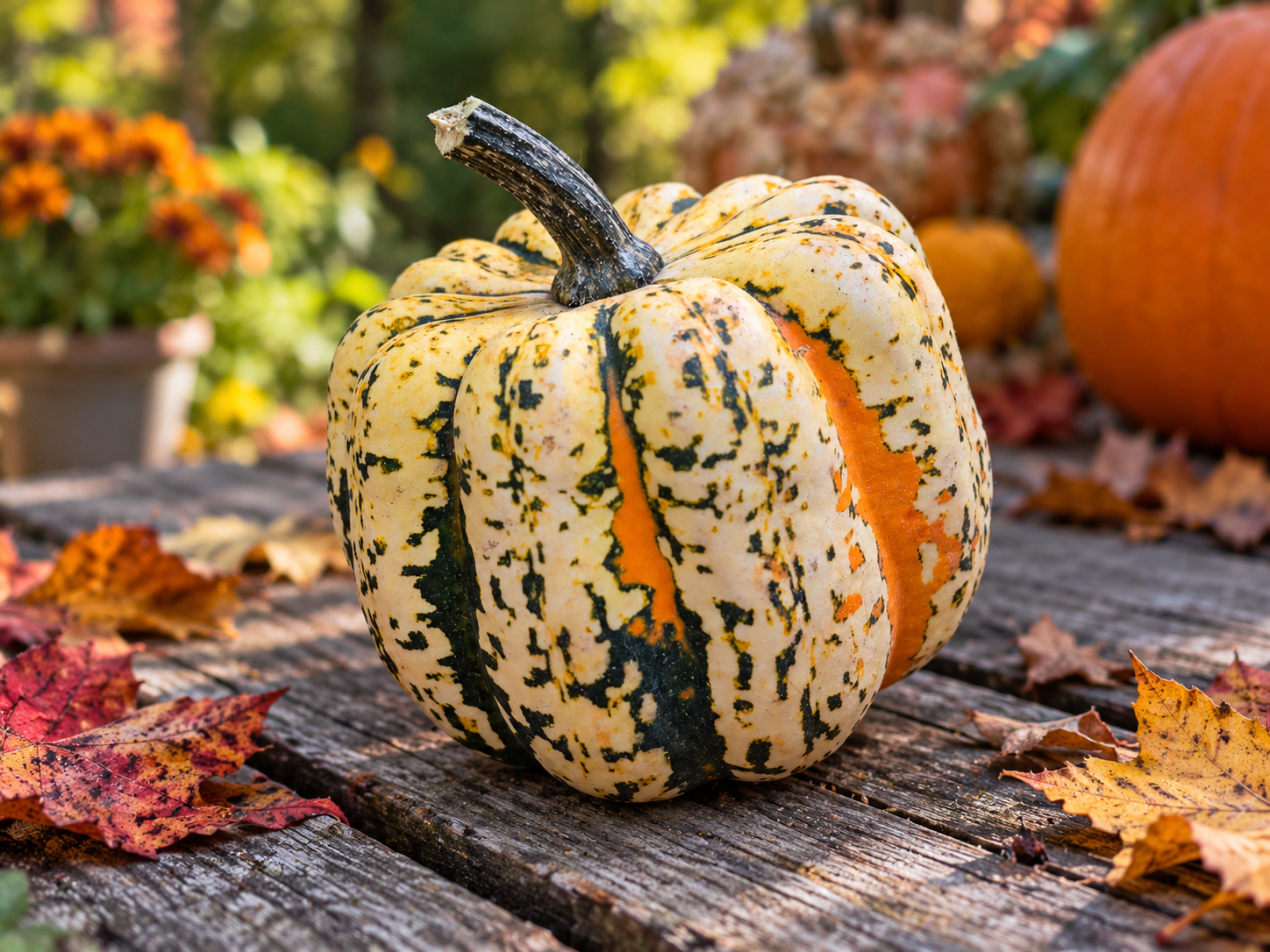
With its miniature pumpkin-like shape, deeply scalloped ribs and beautiful cream-coloured skin decorated with green markings, Sweet Dumpling is one of those vegetables that makes you stop and take a closer look.
Some specimens even develop splashes of yellow or orange as they mature, creating a colourful autumn display that looks almost too pretty to eat.
But don’t let its decorative appearance fool you. Sweet Dumpling is a genuine cooking squash, prized for its small size, tender flesh and naturally sweet flavour.
While exploring some of the wonderful pumpkin and winter squash varieties available during the autumn harvest, I photographed a particularly colourful little squash from the Sweet Dumpling and Carnival family. Its unusual markings inspired me to investigate these closely related varieties and their culinary possibilities.
Let’s explore what Sweet Dumpling squash is, how it compares with Carnival squash, what it tastes like, and how to select, roast, stuff, grow, harvest and store it.
What Is Sweet Dumpling Squash?
Sweet Dumpling squash is a small, edible winter squash belonging to the species Cucurbita pepo.
It’s closely associated with the delicata group of winter squashes, although its appearance is quite different from the familiar long, cylindrical delicata.
Instead of an elongated shape, Sweet Dumpling is usually rounded, squat and deeply ribbed, resembling a miniature ornamental pumpkin.
Its skin is typically creamy white or pale ivory, accented by green stripes or patches concentrated around the ribs.
Underneath that attractive exterior, the flesh is usually yellow to orange and develops a pleasantly sweet flavour when the squash is fully mature.
Sweet Dumpling Squash at a Glance
- Botanical species: Cucurbita pepo
- Type: Winter squash
- Shape: Small, rounded, flattened and deeply ribbed
- Typical skin colour: Cream or ivory with dark green stripes
- Flesh colour: Yellow to orange
- Typical size: Often approximately 0.75–1.5 lb (340–680 g), depending on the selection and growing conditions
- Growing season: Approximately 90–105 days to maturity
- Kitchen uses: Roasting, baking, stuffing, mashing and puréeing
Because it’s so compact, Sweet Dumpling is especially useful for individual servings and small households.
Sweet Dumpling Squash vs. Carnival Squash: What’s the Difference?
Sweet Dumpling and Carnival squash are easy to confuse, especially when you’re looking at colourful autumn market displays.
Both belong to Cucurbita pepo, and both can have squat shapes, deeply defined ribs and striking combinations of cream, green and orange.
However, they’re not simply two names for the same variety.
Classic Sweet Dumpling Squash
Traditional Sweet Dumpling squash usually has a pale cream background with pronounced dark green stripes. Its small, rounded form often resembles a tiny fluted pumpkin.
The variety is valued for its sweet flesh and suitability for roasting or stuffing.
Carnival Squash
Carnival is a distinct hybrid, commonly described as an acorn-type squash with a colourful rind.
Its skin frequently features combinations of orange, yellow, cream and green, sometimes with dramatic speckles or irregular patches.
Carnival squash can also be slightly larger or more acorn-shaped than a classic Sweet Dumpling.
How Can You Tell Them Apart?
Colour and shape provide clues, but they’re not always enough to identify a specific cultivar with certainty.
Growing conditions, maturity and the characteristics of individual selections can produce considerable variation.
For example, a squash with particularly strong orange patches may resemble Carnival, while a cream-coloured squash with dark green rib stripes may look more like traditional Sweet Dumpling.
My colourful specimen has characteristics associated with this closely related group, but its exact cultivar isn’t confirmed. That’s part of the fun of exploring unusual market vegetables!
Fortunately, the practical cooking methods discussed here work well for small, edible, acorn- and dumpling-type winter squashes.
What Does Sweet Dumpling Squash Taste Like?
Sweet Dumpling squash is generally known for its pleasantly sweet flavour and tender golden flesh.
When mature and properly cooked, it can have a mellow, slightly nutty quality that works beautifully with both sweet and savoury seasonings.
Roasting is particularly appealing because it concentrates the flavour and encourages the natural sugars in the flesh to caramelize.
However, sweetness and texture can vary with maturity, growing conditions and storage.
In fact, not every small, colourful squash will taste identical simply because it resembles Sweet Dumpling.
If you’re trying a new variety for the first time, roasting a small portion is an excellent way to discover its individual character.
Can You Eat the Skin of Sweet Dumpling Squash?
Yes. The skin of a properly cooked Sweet Dumpling squash is often tender enough to eat, particularly when the squash is young enough to have a relatively thin rind.
Still, the final texture depends on the individual fruit and how long it has been stored.
If the skin remains tough after cooking, simply scoop out the tender flesh and leave the rind behind.
When roasting halves or stuffed squash, the skin also makes a convenient natural serving bowl.
Always wash the outside before cutting, even if you plan to discard the rind.
How to Choose a Good Sweet Dumpling Squash
When shopping at an autumn market, look for a squash that feels firm and relatively heavy for its size.
Its rind should be mature and intact, with no wet or soft patches.
A little surface scarring isn’t necessarily a problem, but signs of active decay are another matter.
Choose squash with:
- Firm, sound skin
- A mature appearance and good colour development
- No soft or leaking areas
- No visible mould or rotten odours
- An intact, reasonably dry stem when possible
If you’re purchasing a squash primarily for cooking, confirm that it’s being sold as an edible winter squash rather than a decorative gourd.
How to Prepare Sweet Dumpling Squash for Cooking
One of my favourite things about small winter squash is how practical they can be in the kitchen.
Unlike enormous pumpkins that require considerable preparation, a little Sweet Dumpling can often be cut in half and cooked in manageable portions.
Step 1: Wash and Dry
Rinse the squash under clean running water and gently scrub away any soil.
Dry thoroughly before placing it on a stable cutting board.
Step 2: Cut the Squash
Using a sharp knife, carefully cut the squash in half from top to bottom.
Work slowly because winter squash can have firm rinds. If the stem is particularly tough, avoid forcing the knife through it.
Step 3: Remove the Seeds
Use a sturdy spoon to scoop out the seeds and stringy centre.
Set the seeds aside if you’d like to roast them separately.
At this point, your squash is ready for roasting, stuffing or another suitable cooking method.
How to Roast Sweet Dumpling Squash
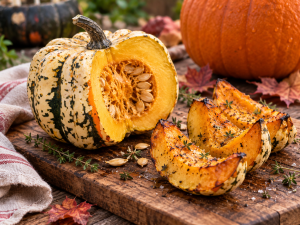
Roasting is one of the easiest ways to enjoy Sweet Dumpling squash, and its naturally small size makes it ideal for individual portions.
This simple method can be adapted to suit your favourite seasonings.
Ingredients
- 2 small Sweet Dumpling squashes
- 1–2 tablespoons olive oil or melted butter
- Salt, to taste
- Freshly ground black pepper, to taste
- Optional: fresh thyme, rosemary or sage
- Optional: a little maple syrup or brown sugar for a sweeter preparation
Instructions
- Preheat your oven to 400°F (200°C).
- Wash and dry the squash thoroughly.
- Carefully cut each squash in half and scoop out the seeds and fibrous centre.
- Brush the exposed flesh with olive oil or melted butter.
- Season with salt, pepper and your preferred herbs or spices.
- Arrange the halves cut-side up on a lightly oiled or parchment-lined rimmed baking sheet.
- Roast for approximately 30–45 minutes, depending on size and thickness.
- Check for doneness by piercing the flesh with a fork. It should be completely tender.
- Remove from the oven and allow to cool slightly before serving.
Cooking tip: For additional browning, you can turn the squash cut-side down for part of the roasting time, then turn it back over to finish with seasonings or a glaze.
Cooking times are approximate. Larger squash and thicker sections may need additional time.
Editor’s note: This is a general roasting method for Sweet Dumpling and similar edible winter squash, rather than a recipe personally tested with the particular photographed specimen.
How to Stuff Sweet Dumpling Squash
Sweet Dumpling squash is an especially attractive choice for stuffed squash because its small halves create natural serving bowls.
First, roast the cleaned halves until nearly tender. Then add a prepared filling and return them to the oven until everything is thoroughly heated.
Some delicious filling ideas include:
- Wild rice with mushrooms, onions and herbs
- Cooked sausage with apples and sage
- Quinoa with cranberries and toasted pecans
- Brown rice with roasted vegetables
- Chickpeas with garlic and warming spices
- Butter, maple syrup and cinnamon for a simple sweet version
For fillings containing meat, poultry or other perishable ingredients, cook them safely before stuffing and reheat the completed dish thoroughly.
A beautifully stuffed Sweet Dumpling squash makes a lovely autumn lunch, side dish or individual holiday serving.
More Delicious Ways to Cook Sweet Dumpling Squash
Although roasting is a favourite method, this little squash has plenty of other uses.
Sweet Dumpling Squash Soup
Roast the flesh until tender, then blend it with cooked onions, garlic and broth for a smooth autumn soup.
For a creamier finish, add a little cream or another suitable dairy or plant-based ingredient.
Mashed Sweet Dumpling Squash
Scoop out the roasted flesh and mash it with butter, salt and freshly ground black pepper.
For a sweeter version, try a touch of maple syrup, cinnamon or nutmeg.
Sweet Dumpling Squash Purée
Blend cooked squash until smooth for use in suitable soups, sauces and baked goods.
Because the moisture content can differ from canned pumpkin purée, adjust recipes as necessary instead of assuming it will behave identically.
Roasted Sweet Dumpling Squash Wedges
Cut the squash into evenly sized wedges, lightly oil and season them, and roast until tender.
The curved, scalloped edges look particularly attractive on an autumn serving platter.
What Flavours Pair Well With Sweet Dumpling Squash?
Because Sweet Dumpling has a naturally mild, sweet flavour, it pairs well with a wide variety of ingredients.
For savoury dishes, try sage, thyme, rosemary, garlic, onions or Parmesan cheese.
Meanwhile, cinnamon, nutmeg, ginger, maple syrup, brown sugar and butter can complement its sweeter qualities.
Toasted nuts and seeds also add a lovely contrast to the soft flesh.
Explore more cooking inspiration in our Nuts & Seeds collection, especially when preparing stuffed squash or festive autumn side dishes.
How to Grow Sweet Dumpling Squash
Sweet Dumpling is a warm-season crop that needs sunshine, fertile soil and enough time to mature before autumn frost.
Although its fruit is small, the plant itself can produce spreading vines.
Sunlight and Soil
Choose a location receiving at least six to eight hours of direct sunlight daily.
Plant in well-drained, fertile soil enriched with mature compost.
Consistent moisture is especially important during flowering and fruit development.
Planting Sweet Dumpling Squash
Seeds can be sown directly outdoors after frost danger has passed and the soil is warm.
In regions with short growing seasons, starting seeds indoors a few weeks before transplanting may provide a head start.
However, squash roots can be sensitive to disturbance, so handle young plants carefully.
Follow your seed supplier’s spacing recommendations. Allow room for vine growth and good air circulation.
Flowers and Pollination
Sweet Dumpling plants produce separate male and female flowers.
Bees and other pollinators help transfer pollen between them, enabling fruit development.
Without adequate pollination, young squash may fail to develop properly.
Watering and Feeding
Water deeply when needed and aim to keep soil moisture reasonably consistent.
Water near the base of the plants rather than repeatedly wetting the leaves.
Mulch may help conserve soil moisture, reduce weeds and protect developing fruit from direct contact with damp ground.
When to Harvest Sweet Dumpling Squash
Sweet Dumpling squash commonly takes approximately 90–105 days to reach maturity, depending on the selection and growing conditions.
Look for mature colouring, firm skin and a stem that has begun to dry.
The rind should resist gentle pressure from a fingernail.
However, maturity is best judged by several characteristics together rather than by colour alone.
Use clean pruning shears to cut the fruit from the vine, leaving a short stem attached when practical.
Handle harvested squash gently to avoid bruises, cracks and other damage that can shorten storage life.
What Happens if Frost Hits Sweet Dumpling Squash?
Like other winter squashes, Sweet Dumpling is sensitive to freezing temperatures.
A light frost may damage the foliage before it seriously damages fully mature fruit.
However, squash that actually freezes or develops water-soaked, soft areas may deteriorate quickly.
For that reason, harvest mature fruit before a hard freeze whenever possible.
If the vines have been damaged but the squash remains firm and sound, inspect the fruit carefully and use it according to its condition and maturity.
Immature squash generally doesn’t store as well as fully matured fruit.
Discard squash showing mould, leaking, rot or substantial softening.
How to Store Sweet Dumpling Squash
Properly stored Sweet Dumpling squash can keep for a useful period after harvest, although it generally isn’t considered one of the very longest-keeping winter squash varieties.
Some variety descriptions suggest approximately three to four months of storage under suitable conditions, but individual fruit may deteriorate sooner.
Store mature, undamaged squash in a cool, dry, well-ventilated location, generally around 50–55°F (10–13°C).
Avoid freezing temperatures, excessive moisture and prolonged exposure to heat.
Check stored squash regularly and promptly remove any fruit showing signs of decay.
Important: Sweet Dumpling and related delicata-type squash don’t necessarily benefit from the same prolonged warm curing procedures recommended for some thicker-skinned winter squashes. Follow variety-specific storage guidance rather than automatically curing every squash the same way.
Can You Save Sweet Dumpling Squash Seeds?
Seeds can be collected from fully mature, healthy squash, but seed saving requires some planning if you want plants that resemble the parent variety.
Sweet Dumpling belongs to Cucurbita pepo, which includes several other familiar squashes and pumpkins.
Compatible varieties grown nearby can cross-pollinate through insect activity.
Consequently, seeds from an unisolated garden may produce unexpected shapes, colours or other characteristics the following year.
For reliable seed saving, gardeners use appropriate isolation methods or controlled hand-pollination.
Dry cleaned seeds thoroughly before placing them in a labelled container for storage.
Is Sweet Dumpling Squash the Same as an Acorn Squash?
Not exactly, although the two are closely related.
Both Sweet Dumpling and familiar acorn squash varieties belong to Cucurbita pepo.
However, Sweet Dumpling usually has a small, rounded, fluted appearance rather than the more traditional pointed acorn shape.
Carnival is often classified as an acorn-type hybrid, helping explain why these colourful squash varieties can look so similar.
In the kitchen, many of the same roasting, stuffing and baking techniques work across these edible winter squash types.
Watch Squash Recipes + Reviews on Cooking With Kimberly
Looking for more delicious ways to prepare winter squash? Join me on Cooking With Kimberly for squash recipes, cooking techniques, food reviews and seasonal kitchen inspiration.
Watch: Squash Recipes + Reviews
You can also watch the complete Squash Recipes + Reviews playlist on YouTube.
Sweet Dumpling Squash in the Autumn Kitchen
There’s something special about a vegetable that’s as attractive on an autumn table as it is delicious on the dinner plate.
Sweet Dumpling squash offers the best of both worlds.
It’s small enough for convenient portions, colourful enough to inspire seasonal decorating, and versatile enough for roasting, stuffing, mashing and soups.
And because the closely related Carnival varieties can be so striking, exploring the differences between them makes an autumn market visit even more interesting.
Whether you’re growing your own winter squash or discovering an unfamiliar variety at a farm market, don’t overlook these charming little fruits.
Sometimes wonderful things really do come in small packages!
Have you ever grown or cooked Sweet Dumpling or Carnival squash? I’d love to hear which variety you enjoyed and how you prepared it.
Be a Champion in Your Kitchen, and Eat Deliciously!
Explore More Autumn Recipes and Ingredients
Explore our Winter Squash Recipes & Guides for more seasonal varieties, growing tips and cooking inspiration. You can also browse our complete Squash collection, discover Pumpkin Recipes, and explore our October Food Holidays & Events.