What Is Red Kuri Squash? Growing, Cooking & Storage
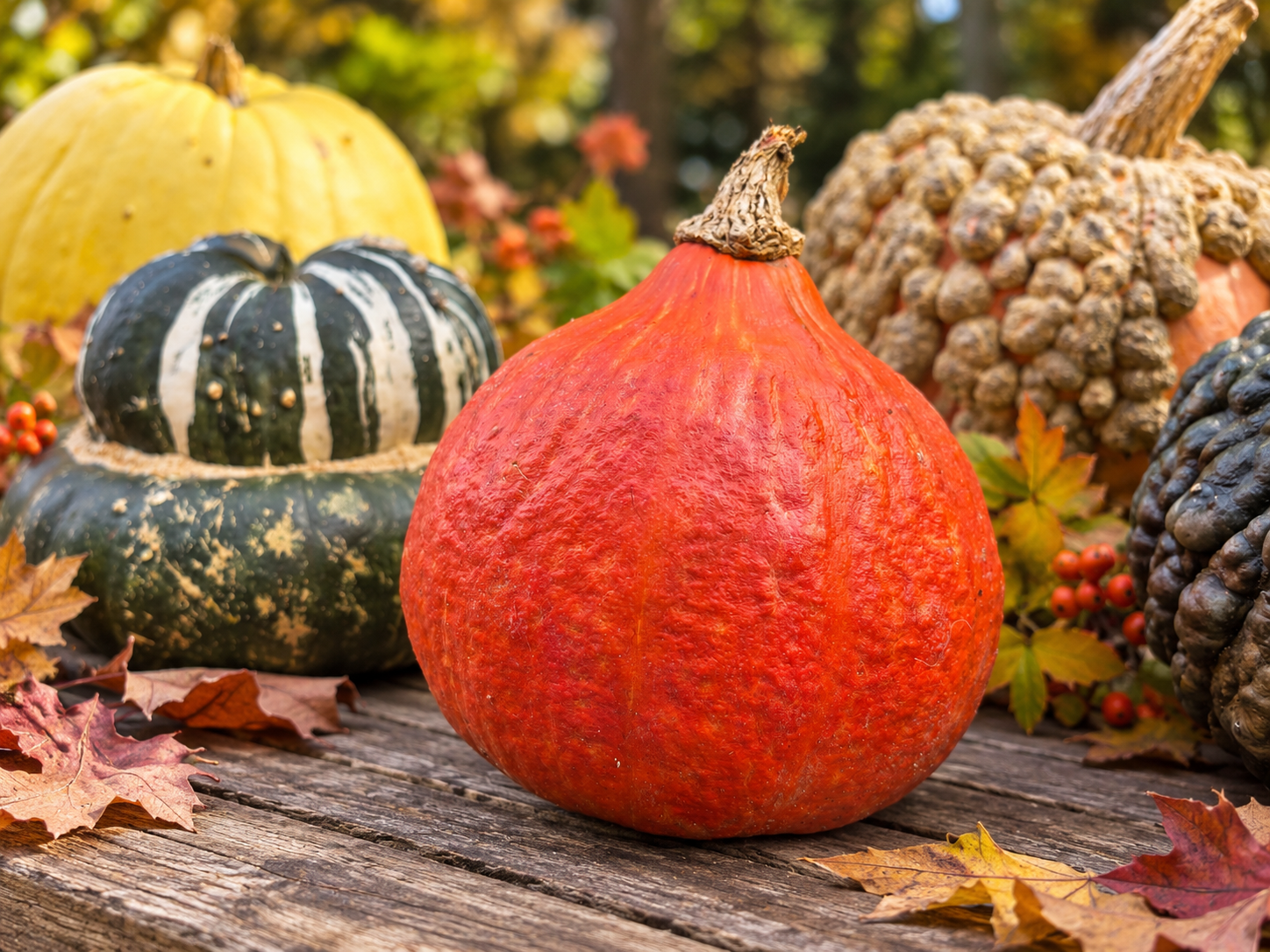
Bright as an autumn sunset and shaped almost like a little orange teardrop, Red Kuri squash is one of those vegetables that immediately catches my eye at the market!
This charming winter squash has a distinctive appearance, wonderfully sweet flesh and a deliciously nutty flavour that makes it especially appealing for autumn cooking.
When I came across one at the market, it was labelled “Red Curry Squash.” That name caught my attention, along with its gorgeous colour and unusual shape.
The familiar culinary variety is generally called Red Kuri, and it’s also known as Uchiki Kuri or Orange Hokkaido squash.
Whether you’re discovering it for the first time or looking for new ways to use it, this remarkable squash deserves a place in our growing Cooking With Kimberly ingredient encyclopedia.
Let’s explore its history, botanical classification, flavour, edible skin, cooking methods, growing requirements, harvesting and storage.
What Is Red Kuri Squash?
Red Kuri squash is an edible winter squash belonging to the species Cucurbita maxima.
It is associated with the Hubbard squash group, although its appearance is quite different from the enormous blue-grey Hubbard squashes many gardeners recognize.
Instead, Red Kuri typically develops relatively compact, rounded to teardrop-shaped fruits with bright reddish-orange skins and firm yellow to orange flesh.
The variety is valued for its attractive appearance, smooth cooked texture and naturally sweet flavour.
One of its most convenient features is that the rind becomes tender when cooked, meaning that peeling is often unnecessary.
Red Kuri Squash at a Glance
- Botanical name: Cucurbita maxima
- Common name: Red Kuri squash
- Other names: Uchiki Kuri, Orange Hokkaido, Baby Red Hubbard, onion squash
- Squash family: Hubbard-type winter squash
- Colour: Bright orange to reddish-orange
- Shape: Rounded to teardrop-shaped, often tapering near the stem
- Flesh: Firm, yellow to golden-orange
- Flavour: Naturally sweet, mellow and slightly nutty
- Typical size: Approximately 3–7 lb (1.4–3.2 kg), although individual fruits vary
- Days to maturity: Commonly about 92–100 days
- Uses: Roasting, soups, purées, stuffing, baking and savoury side dishes
Although its shape resembles a small pumpkin, Red Kuri is especially prized as a cooking squash.
Is Red Kuri the Same as Red Curry Squash?
When I purchased my squash, the market label identified it as Red Curry Squash.
However, the well-established variety name is Red Kuri, with kuri referring to chestnuts in Japanese.
Because the names sound similar, it’s possible to encounter different spellings or informal market descriptions.
That doesn’t necessarily mean every squash sold under the name “Red Curry” has been positively identified as Red Kuri.
For this reason, it’s useful to compare the fruit’s shape, colouring and other characteristics with known Red Kuri descriptions.
My specimen’s vibrant orange colour and distinctive tapered shape are consistent with this type of squash, although the original supplier’s cultivar identification has not been independently confirmed.
For our culinary encyclopedia, Red Kuri is the established variety name we’ll use.
Where Does Red Kuri Squash Come From?
Red Kuri is closely associated with Japanese squash breeding and selection.
Its background is connected with Hubbard-type squashes, which were developed and adapted into varieties suited to different culinary preferences and growing conditions.
The name kuri is Japanese for chestnut, reflecting the squash’s pleasantly nutty, chestnut-like flavour.
Red Kuri is frequently called Uchiki Kuri, while Orange Hokkaido is another widely used market name.
In France, similar squash are commonly known as potimarron, a name associated with pumpkin and chestnut flavours.
As with many cultivated vegetables, regional naming can vary. Furthermore, not every squash marketed as Hokkaido is necessarily the identical named cultivar.
Today, Red Kuri is enjoyed in home gardens and kitchens far beyond Japan.
What Does Red Kuri Squash Taste Like?
Red Kuri squash is known for its naturally sweet, mellow flavour, often described as having hints of chestnut.
Unlike watery or bland squash, a well-matured Red Kuri can develop a satisfyingly rich flavour and smooth cooked texture.
Roasting is especially useful because it concentrates natural sweetness and encourages caramelization along the edges.
Meanwhile, simmering and puréeing create a smooth consistency that’s wonderful in soups and sauces.
Its flavour pairs beautifully with butter, olive oil, garlic, sage, thyme, ginger and warm autumn spices.
However, as with any winter squash, sweetness and texture will vary according to maturity, growing conditions and storage.
Can You Eat the Skin of Red Kuri Squash?
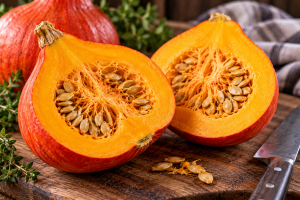
Yes! Red Kuri squash skin is generally edible when thoroughly cooked.
This is one of the variety’s most convenient culinary characteristics.
Although the raw rind feels firm, it usually softens considerably during roasting, baking or simmering.
As a result, you can often leave the skin on when preparing soups, roasted wedges or other cooked dishes.
The bright orange skin also contributes colour to the finished preparation.
However, some fruits have firmer skins than others, especially after prolonged storage. If the cooked rind remains unpleasantly tough, simply remove it.
Always wash the squash thoroughly before cutting or cooking it.
How to Choose Good Red Kuri Squash
When purchasing Red Kuri squash, look for a fruit that feels firm and relatively heavy for its size.
The skin should be sound, without large cracks, wet areas or soft spots.
A mature squash generally develops a rich, even orange to reddish-orange colour, although slight natural variations are normal.
Choose specimens with:
- A firm, undamaged rind
- Good mature colouring
- No visible mould
- No leaking or mushy areas
- No unpleasant fermented or rotten odour
- A sound, dry stem when possible
Minor surface marks may be harmless, but fruit showing active deterioration should be avoided.
How to Prepare Red Kuri Squash for Cooking
Preparing Red Kuri is straightforward, especially when you don’t need to peel away the rind.
Wash and Dry the Squash
Rinse the exterior under clean running water, gently scrubbing away any dirt.
Then dry the squash and place it on a stable, non-slip cutting board.
Cut It into Manageable Pieces
Using a sharp, sturdy kitchen knife, carefully cut the squash in half.
Because winter squash can be hard, take your time and avoid forcing the knife through a particularly tough stem.
Once halved, scoop out the seeds and stringy centre using a sturdy spoon.
Choose Your Cooking Method
At this point, you can cut the squash into wedges, cubes or other pieces suited to your recipe.
For roasting, leaving the skin on is particularly convenient.
For purées or very smooth soups, you can cook the squash first and remove any remaining tough skin afterward if necessary.
How to Roast Red Kuri Squash
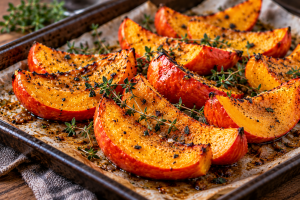
Roasting is a wonderful way to enjoy the natural sweetness and nutty flavour of Red Kuri squash.
The following is a flexible kitchen method for mature, edible Red Kuri or similar Hubbard-type winter squash.
Ingredients
- 1 medium Red Kuri squash
- 1–2 tablespoons olive oil, as needed
- Salt, to taste
- Freshly ground black pepper, to taste
- Optional: fresh rosemary, sage or thyme
- Optional: a little maple syrup for a sweeter preparation
Instructions
- Preheat your oven to 400°F (200°C).
- Wash and dry the squash thoroughly.
- Carefully cut it in half and scoop out the seeds and fibrous centre.
- Cut into approximately 1-inch-thick wedges or similarly sized pieces.
- Arrange the pieces in a single layer on a lightly oiled or parchment-lined rimmed baking sheet.
- Brush or toss lightly with olive oil.
- Season with salt, pepper and any desired herbs.
- Roast for approximately 25–40 minutes, turning once if necessary.
- Check frequently toward the end of cooking. The squash should be tender when pierced with a fork, with lightly browned edges.
- Serve warm as a side dish or use the cooked squash in another recipe.
Cooking tip: Thick pieces may take longer than thin wedges. Judge doneness by tenderness rather than relying exclusively on the clock.
Since the skin is generally edible after cooking, you can taste a small portion to decide whether you enjoy its texture.
Editor’s note: This is a general roasting technique for Red Kuri-type winter squash, not a claim that the photographed market squash has already been prepared or taste-tested in the Cooking With Kimberly kitchen.
How to Make Red Kuri Squash Soup
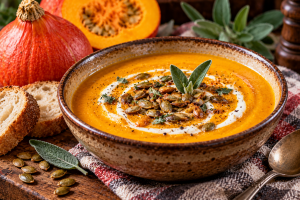
One of the most appealing uses for Red Kuri is a smooth, comforting autumn soup.
Because the cooked flesh can be naturally creamy, it makes a wonderful base for simple vegetable soups.
Start by roasting or simmering prepared squash until tender.
Meanwhile, gently cook chopped onions and garlic in a little butter or olive oil.
Add the cooked squash, a suitable quantity of vegetable or chicken broth, and seasonings such as ginger, sage or thyme.
Simmer until the flavours combine, then blend carefully until smooth.
For additional richness, finish with cream, coconut milk or another suitable ingredient.
Adjust the thickness with extra broth, if necessary.
Garnish with fresh herbs, toasted pumpkin seeds, a drizzle of cream or a little olive oil.
Because the squash itself can be fairly sweet, savoury additions such as garlic, onions and black pepper provide a delicious balance.
More Delicious Ways to Cook Red Kuri Squash
Roasting and soup are only the beginning!
Stuffed Red Kuri Squash
Its rounded shape and generous seed cavity make Red Kuri a good candidate for stuffing.
Roast the halves until nearly tender, then fill with a prepared mixture of grains, vegetables, herbs or properly cooked meat.
Return to the oven until the filling is thoroughly heated and the squash is completely tender.
Red Kuri Squash Purée
Roast the squash until soft, then blend or mash the flesh.
Use the purée in suitable soups, pasta sauces, breads or other recipes.
For baking, remember that homemade squash purée may contain more or less moisture than commercially canned pumpkin.
Red Kuri Squash Pasta Sauce
Blend roasted squash with cooked garlic, onions, a little broth and Parmesan cheese or cream for a savoury pasta sauce.
Add sage or thyme for a particularly autumnal flavour.
Red Kuri Squash Curry
Despite the similarity between the words kuri and curry, Red Kuri isn’t named after the spice blend or dish.
Nevertheless, its sweet flesh is delicious in vegetable curries!
Try combining it with ginger, garlic, onions, coconut milk and curry seasonings.
Simmer until the squash becomes tender, then serve with rice or another suitable accompaniment.
Red Kuri Squash with Toasted Nuts and Seeds
Roasted Red Kuri also pairs beautifully with toasted pecans, walnuts, pumpkin seeds or other crunchy toppings.
The contrast between tender squash and crisp nuts can make a simple side dish feel extra special.
For more inspiration, explore our Nuts & Seeds recipes and ingredient guides.
What Flavours Pair Well with Red Kuri Squash?
Thanks to its sweet, chestnut-like flavour, Red Kuri works with a broad selection of sweet and savoury ingredients.
For savoury dishes, try:
- Garlic and onions
- Sage, rosemary and thyme
- Browned butter
- Black pepper and sea salt
- Parmesan cheese
- Ginger and curry spices
- Coconut milk
- Toasted pumpkin seeds
For sweeter preparations, consider:
- Maple syrup
- Cinnamon and nutmeg
- Brown sugar
- Butter
- Apples or pears
- Toasted pecans or walnuts
As always, start with a little seasoning and adjust to suit the natural flavour of your squash.
How to Grow Red Kuri Squash
Red Kuri is a warm-season crop grown for its mature winter squash fruit.
It needs ample sunlight, fertile soil and enough frost-free growing time for its squash to mature.
Sunlight and Soil Requirements
Choose a planting location receiving at least six to eight hours of direct sunlight each day.
Red Kuri grows best in fertile, well-drained soil containing sufficient organic matter.
Incorporating finished compost can help support vigorous plant development.
However, avoid waterlogged conditions, which can damage roots and reduce plant health.
When to Plant Red Kuri Squash
Plant seeds outdoors only after the danger of frost has passed and the soil is sufficiently warm.
In cooler Canadian growing regions, you may choose to start seeds indoors a few weeks before the last expected spring frost.
However, squash roots are sensitive to disturbance, so transplant carefully.
For direct sowing, follow the seed packet’s recommended soil temperatures and planting depth.
Spacing Red Kuri Squash Plants
Red Kuri develops vigorous vines that need room to spread.
Allow generous spacing between plants and planting hills, adjusting according to the growing system and seed supplier’s instructions.
A typical home garden may require several feet between plants, with even more space for unrestricted vine growth.
Mulching can help suppress weeds, conserve soil moisture and reduce direct contact between developing squash and damp ground.
Watering and Fertilizing
Provide consistent moisture, particularly during flowering and fruit development.
Water deeply when needed, directing water toward the soil instead of constantly wetting the foliage.
In addition, maintain fertile soil without applying excessive nitrogen, which may encourage foliage growth at the expense of fruit production.
Flowers and Pollination
Red Kuri squash plants produce separate male and female flowers.
Bees and other pollinating insects help move pollen between flowers, allowing the fruit to develop.
Therefore, healthy pollinator activity is important for a productive squash patch.
When Is Red Kuri Squash Ready to Harvest?
Red Kuri commonly needs approximately 92–100 days to mature, although actual timing varies with weather, planting dates and growing conditions.
Look for several signs of maturity:
- Deep orange to reddish-orange colouring
- Firm, mature rind
- A stem that has begun drying and becoming corky
- Fruit that has reached a mature size for the variety
- A rind that resists gentle fingernail pressure
Use clean pruning shears or a sharp knife to cut the squash from the vine.
Leave a short stem attached when possible, and avoid lifting or carrying heavy fruit by the stem.
Handle harvested squash gently because cuts and bruises can shorten storage life.
What Happens When Frost Hits Red Kuri Squash?
Although Red Kuri is called a winter squash, its vines are not frost-hardy.
A light frost may damage the leaves before causing significant damage to mature fruit.
However, exposure to a hard freeze can injure the squash itself and reduce its ability to remain in storage.
If cold weather threatens, harvest mature, sound squash before freezing conditions arrive.
When foliage has wilted from frost, examine the fruit individually.
Firm, undamaged mature squash may still be suitable for use, but fruit that has actually frozen or developed soft, water-soaked areas should not be treated as long-keeping storage squash.
Discard squash with mould, extensive softening, leaking or active decay.
How to Cure and Store Red Kuri Squash
Proper harvesting and storage are important if you want to enjoy winter squash well beyond the autumn growing season.
Red Kuri is often described as a useful storage variety, but its actual keeping quality depends on maturity, handling and storage conditions.
Curing After Harvest
Sound, fully mature Cucurbita maxima squash may benefit from an appropriate period of warm, dry, well-ventilated curing after harvest.
When recommended for the variety, curing is commonly carried out for approximately one week or slightly longer under warm conditions.
However, curing does not repair fruit that has already frozen, rotted or suffered serious damage.
Always follow the seed supplier’s variety-specific recommendations where available.
Storing Red Kuri Squash
After harvest and any appropriate curing, store sound squash in a cool, dry, well-ventilated location.
A common target temperature for winter squash storage is approximately 50–55°F (10–13°C).
For best results:
- Keep squash away from freezing temperatures.
- Avoid excessive moisture and condensation.
- Allow air to circulate around individual fruit.
- Store squash off damp floors.
- Avoid piling heavy squash directly on one another.
- Inspect regularly for soft areas, mould and deterioration.
Well-stored Red Kuri may remain useful for several months, but don’t rely on a fixed storage life for every fruit.
Use any sound squash beginning to soften before deterioration progresses.
Can You Save Red Kuri Squash Seeds?
Red Kuri is available as an open-pollinated variety, making seed saving possible when the source variety is known.
However, Cucurbita maxima varieties can cross-pollinate with other compatible squashes grown nearby.
For example, other Hubbard-type squash and many large pumpkin varieties belong to the same species.
Consequently, seeds saved from plants exposed to uncontrolled cross-pollination may produce offspring that differ from the parent.
To maintain a particular variety reliably, gardeners use suitable isolation or controlled hand-pollination.
If you’re saving seeds for personal experimentation, label them clearly and record the growing conditions.
Remove seeds from fully mature, healthy squash, clean them, dry thoroughly and store in cool, dry conditions.
Is Red Kuri Squash the Same as Kabocha?
Red Kuri and kabocha are related, but the names should not automatically be treated as identical.
Both are associated with Japanese winter squash traditions, and many varieties belong to Cucurbita maxima.
However, kabocha is a broader culinary term that may refer to several Japanese squash types, often including familiar dark green, rounded varieties.
Red Kuri is recognizable for its bright orange skin and characteristic teardrop shape.
Although the two can sometimes be used in similar recipes, flavour, moisture and texture may differ.
Watch Squash Recipes + Reviews on Cooking With Kimberly
Looking for more inspiration for cooking with winter squash?
Join me on Cooking With Kimberly for recipes, ingredient reviews, cooking ideas and delicious squash preparations.
Watch: Squash Recipes + Reviews
You can also watch the complete Squash Recipes + Reviews playlist on YouTube.
Why Red Kuri Squash Deserves a Place in Your Kitchen
Red Kuri is one of those vegetables that manages to be beautiful and practical at the same time.
Its vivid orange colour makes it a gorgeous addition to an autumn harvest display, while its naturally sweet flavour and tender cooked skin make it useful for everyday cooking.
Whether you roast it with fresh herbs, blend it into a comforting soup or try it in a savoury curry, this lovely little Hubbard-type squash offers plenty of culinary possibilities.
And discovering a vegetable sold under an unfamiliar name is often the beginning of a wonderful kitchen adventure!
That’s exactly why I love exploring unusual varieties and sharing what I learn here on Cooking With Kimberly.
Have you ever grown or cooked Red Kuri, Uchiki Kuri or Orange Hokkaido squash? Let me know how you enjoyed it in the comments!
Be a Champion in Your Kitchen, and Eat Deliciously!
Explore More Squash Recipes and Varieties
Continue exploring our Winter Squash collection, browse the complete Squash encyclopedia, and discover more articles in our growing Red Kuri Squash category.
For seasonal inspiration, visit October Food Holidays & Events.