Why Do Canadians Celebrate Thanksgiving in October? History, Food & Traditions
Why do Canadians celebrate Thanksgiving in October when our American neighbors celebrate in November?
I was chatting with one of my best friends in Louisiana the other evening when she discovered that we were already celebrating Canadian Thanksgiving. She was genuinely surprised!
“WHY?!” she asked.
And you know what? I realized I didn’t have a particularly good explanation for her. We’ve always celebrated Thanksgiving in October here in Canada, but why exactly?
Well, I decided to find out!
As it turns out, Canadian Thanksgiving has a fascinating history involving the autumn harvest, centuries-old traditions, changing national holidays, and some interesting differences between Canada and the United States.
When Is Canadian Thanksgiving?
In Canada, Thanksgiving is celebrated on the second Monday of October.
In 2026, Canadian Thanksgiving falls on Monday, October 12.
Meanwhile, our American neighbors celebrate Thanksgiving on the fourth Thursday of November. That means the two holidays are usually separated by approximately six weeks, although the exact interval varies.
Both celebrations share familiar traditions of family gatherings, gratitude, wonderful food, and autumn festivities. However, their histories and calendars developed differently.
Why Do Canadians Celebrate Thanksgiving in October?

To understand why Canadians celebrate Thanksgiving in October, we have to begin with the earlier autumn harvest across much of the country.
Much of Canada experiences a shorter growing season than many parts of the United States. Our fields, orchards, and gardens often produce their final abundance earlier in the autumn, before freezing weather arrives.
Traditionally, harvest celebrations were an opportunity to give thanks after the crops had been gathered and food had been prepared or preserved for winter.
Think of the beautiful pumpkins, winter squash, apples, potatoes, carrots, cranberries, and other seasonal foods that fill Canadian kitchens during September and October.
By late November, many Canadian growing regions are already experiencing winter conditions!
Still, climate isn’t the entire explanation. Canada’s Thanksgiving date changed several times before the modern October holiday was established.
Thanksgiving Traditions Before Canada Existed
Giving thanks for the land, food, community, and seasonal abundance certainly did not begin with European settlement.
Indigenous peoples throughout the lands now called Canada have long maintained their own ceremonies, teachings, and traditions connected with gratitude, gathering food, hunting, fishing, planting, and harvesting.
These practices differ among nations and communities. There is no single Indigenous Thanksgiving tradition, nor should their distinct cultural and spiritual practices be treated as interchangeable with the modern Canadian holiday.
European settlers also brought harvest celebrations and religious days of thanksgiving with them. Over time, these customs interacted with changing communities, political events, and regional food traditions.
Was Canada’s First Thanksgiving in 1578?
You may have heard that an English explorer named Martin Frobisher held a thanksgiving observance in the eastern Canadian Arctic in 1578.
His expedition is often mentioned in accounts of Canadian Thanksgiving history. The observance was associated with giving thanks after a difficult voyage rather than celebrating an agricultural harvest.
But calling it Canada’s absolute “first Thanksgiving” would overlook the gratitude traditions already practiced by Indigenous peoples.
Another important chapter came in the early 1600s, when French settlers in Acadia held communal meals and celebrations, including gatherings associated with the Order of Good Cheer at Port-Royal.
Later, American Loyalists and other settlers helped spread additional Thanksgiving customs, including foods and traditions recognizable at modern holiday dinners.
Our Thanksgiving history, then, is not one simple event. It developed through many different influences over centuries.
How Canadian Thanksgiving Became an October Holiday
For much of Canadian history, Thanksgiving did not have one permanent date.
Special days of thanksgiving were proclaimed for different occasions, including harvests, significant national events, and other reasons for public gratitude.
1879: Thanksgiving Becomes an Annual National Holiday
In 1879, Canada’s Parliament established an annual Thanksgiving observance, initially held on November 6.
However, the date continued to change over the following decades.
1921–1931: Thanksgiving and Armistice Day
For a period beginning in 1921, Thanksgiving and Armistice Day were observed together in November.
In 1931, Armistice Day was separated and fixed on November 11, becoming Remembrance Day. Thanksgiving once again had its own changing date.
1957: The Modern Canadian Thanksgiving Date Is Established
Finally, in 1957, a federal proclamation established Thanksgiving on the second Monday in October.
That is the date Canadians still observe today.
For more historical background, explore Canada’s History: The History of Thanksgiving in Canada and the Government of Canada’s history of Remembrance Day.
Canadian Thanksgiving vs. American Thanksgiving
Although we share many holiday foods and customs, there are several interesting differences between the two celebrations.
- Date: Canada celebrates on the second Monday in October; the United States celebrates on the fourth Thursday in November.
- Season: Canadian Thanksgiving falls closer to the traditional harvest period across much of the country.
- History: The holidays developed through different national events and traditions, even though they influenced one another.
- Long weekend: Many Canadians gather for their main Thanksgiving meal on Sunday or Monday, depending on their family schedules.
- Food: Roast turkey, stuffing, potatoes, vegetables, cranberries, and pumpkin desserts are favorites in both countries.
Of course, every family celebrates differently. Some host elaborate dinners, others enjoy a simple seasonal meal, and some don’t observe the holiday at all.
What Do Canadians Traditionally Eat for Thanksgiving?
Now we’re getting to my favorite part: the food!
Planning a holiday feast? Explore our collection of Thanksgiving recipes on Cooking With Kimberly, including delicious main dishes, autumn vegetables, side dishes, desserts, and holiday cooking videos.
Canadian Thanksgiving menus vary by region, heritage, and family tradition, but many celebrations feature familiar autumn ingredients and hearty home cooking.
Roast Turkey and Traditional Trimmings

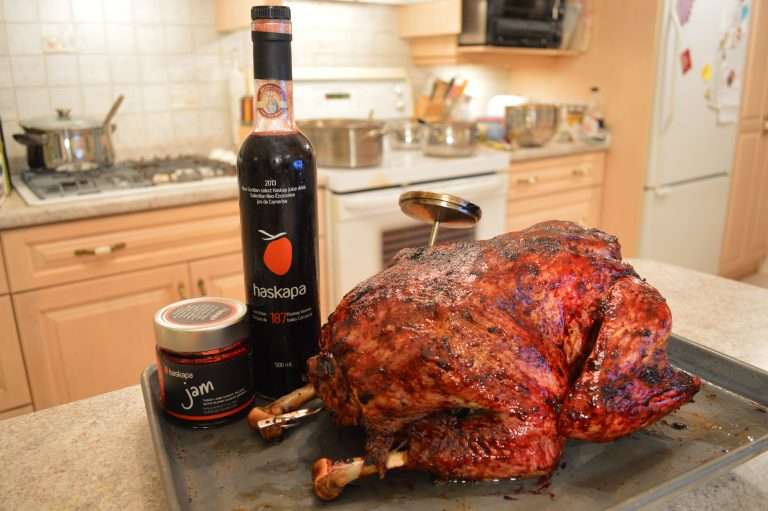
For many households, a beautifully roasted turkey is the centerpiece of Thanksgiving dinner.
If you’re preparing your own bird, you may enjoy our turkey recipes and cooking tutorials, including advice for preparing turkey parts and making delicious use of the neck and giblets.
Glazed Ham and Roast Beef
Not everyone serves turkey! A gorgeous honey-glazed spiral-sliced ham or a beautiful eye of round roast beef can also make a wonderful holiday centerpiece.
Autumn Vegetables and Side Dishes
This is where the harvest season really shines.
Think roasted winter squash, buttery corn on the cob, creamy mashed potatoes, glazed carrots, turnips, sweet potatoes, and savory stuffing.
Our roasted butternut squash recipes and butter-roasted corn make lovely additions to a Thanksgiving menu.
Pies, Apples, and Pumpkin Desserts
And what would a harvest feast be without dessert?
Apple pie, pumpkin pie, baked apples, fruit crisps, and other homemade treats bring the flavors of autumn to the table.
Explore our apple recipes and pumpkin recipes for more seasonal inspiration.
Watch Our Thanksgiving Recipes & Cooking Videos
Looking for some delicious holiday inspiration? Join me in the kitchen with our Cooking With Kimberly Thanksgiving video playlist! From preparing holiday main dishes to making wonderful sides and seasonal favorites, there’s plenty to explore as you plan your celebration.
Watch: Cooking With Kimberly Thanksgiving Recipes & Videos
What Does Thanksgiving Mean Today?

For me, Thanksgiving is about much more than a particular date on the calendar.
It’s an opportunity to recognize what the land provides, appreciate the work involved in growing and preparing food, and share something delicious with the people we love.
As someone who appreciates gardening, keeping poultry, cooking from scratch, and making good use of seasonal ingredients, I find the connection between Thanksgiving and the harvest especially meaningful.
And gratitude doesn’t have to mean pretending that life is always easy or that everything is perfect.
Sometimes it’s as simple as appreciating a nourishing meal, a good harvest, a warm kitchen, or the opportunity to gather together.
Happy Canadian Thanksgiving!
So, to my dear friend in Louisiana who asked why Canadians celebrate Thanksgiving in October instead of November: now we know!
Our earlier harvest helps explain the timing, but the story also involves centuries of changing customs and a national holiday date that was finally fixed in 1957.
Whether you’re celebrating Canadian Thanksgiving in October or preparing for American Thanksgiving in November, I hope your table is filled with good food, warm company, and something wonderful to be thankful for.
For more seasonal inspiration, visit our October Food Holidays & Events Guide.
Happy Thanksgiving from all of us at Cooking With Kimberly!
Until next time…
Be a Champion in Your Kitchen, and Eat Deliciously!